
How to Search the Willard Court Docket
Willard offers no official public Mayor's Court docket portal and no citation-lookup form. So the citation or court notice comes first. It carries the date, the venue, and the case details a caller needs. From there, reach City Hall directly: 631 S. Myrtle Ave., Willard, Ohio 44890, or 419-933-2581. Staff can confirm a court date, provide a copy of a record, and name any receiving court listed after a transfer. That one call answers most Willard court docket questions.
- Read the Willard citation or notice for the stated court, case reference, hearing date, and any transfer language.
- Contact Willard City Hall and ask the Mayor's Court record keeper for docket or copy availability for that matter.
- Ask whether the Willard case remains in Mayor's Court or was certified to a court of record in Huron County.
- Use the court named in the certification or transfer notice for the current record, rather than searching an unrelated municipal portal.
- For a Common Pleas matter, use the Huron County Clerk of Courts Legal Division search or clerk route only after jurisdiction points there.
The city's online payment service covers utility billing and miscellaneous city payments. It is not a court-ticket search. Treat it as a billing tool, not a Willard citation portal. The missing web form only changes the lookup order. The City Hall, Mayor's Court, and receiving-court record paths all remain open.
Willard Court Docket Is Not CaseLook
Norwalk and Bellevue both run public CaseLook entry systems. Willard does not. The city publishes no docket-search screen. The Mayor's Court code serves as a jurisdiction and record-keeping source rather than a search application. So never type a Willard name or citation into a nearby municipal portal just because the portal exists. That gap has an upside. It keeps a Willard inquiry anchored to the paper record. The office can then name the current court. A citation supplies a date and venue that a broad web search cannot. A Mayor's Court contact can say whether a record is local, restricted, transferred, or simply unavailable online. The right response to a missing Willard portal is a local records inquiry. Do not assume no official docket exists. The official Willard city page offers the City Hall contact route that opens a local record question.
The Willard channel on the city site is a place to find contacts and records, nothing more. Paying a utility bill there does not let you search a Willard court docket or a traffic case.
The Willard Mayor's Court
Willard's local court is a Mayor's Court, not a municipal court with a CaseLook brand. City Code Chapter 191 gives the Mayor jurisdiction over Willard ordinance violations. It also covers criminal moving traffic violations on state highways inside the city limits, subject to Ohio statutory and traffic-rule limits. The same code says the Mayor keeps the docket and files following laws that apply to county courts. That makes the Willard docket an official local record. It does not mean every Willard matter is heard there. Common Pleas, Norwalk, Bellevue, Probate, Juvenile, and other court routes keep separate jurisdiction. City Hall can identify whether the Mayor's Court holds the specific record you need. One more point matters. A Mayor's Court is not a court of record. That affects how a local proceeding and any later certification are read. The city code sets a defined path for sending specified matters to a Huron County court of record. There is no single unified online docket. Name the local case in your request. Ask whether it is still a Mayor's Court record or has reached a receiving court with its own clerk.
Willard Mayor's Court Docket Rules
Chapter 191 is the official source for Willard Mayor's Court jurisdiction, the docket and file rule, and jury-right transfers. It describes a court process and its record duties. It is not a live calendar. For an older Willard case, the code explains where the docket originates, while the record keeper or receiving court confirms whether a particular file or setting still exists. The Willard Mayor's Court code sets out the local record path. It does not promise a web-search feature the city has not published.
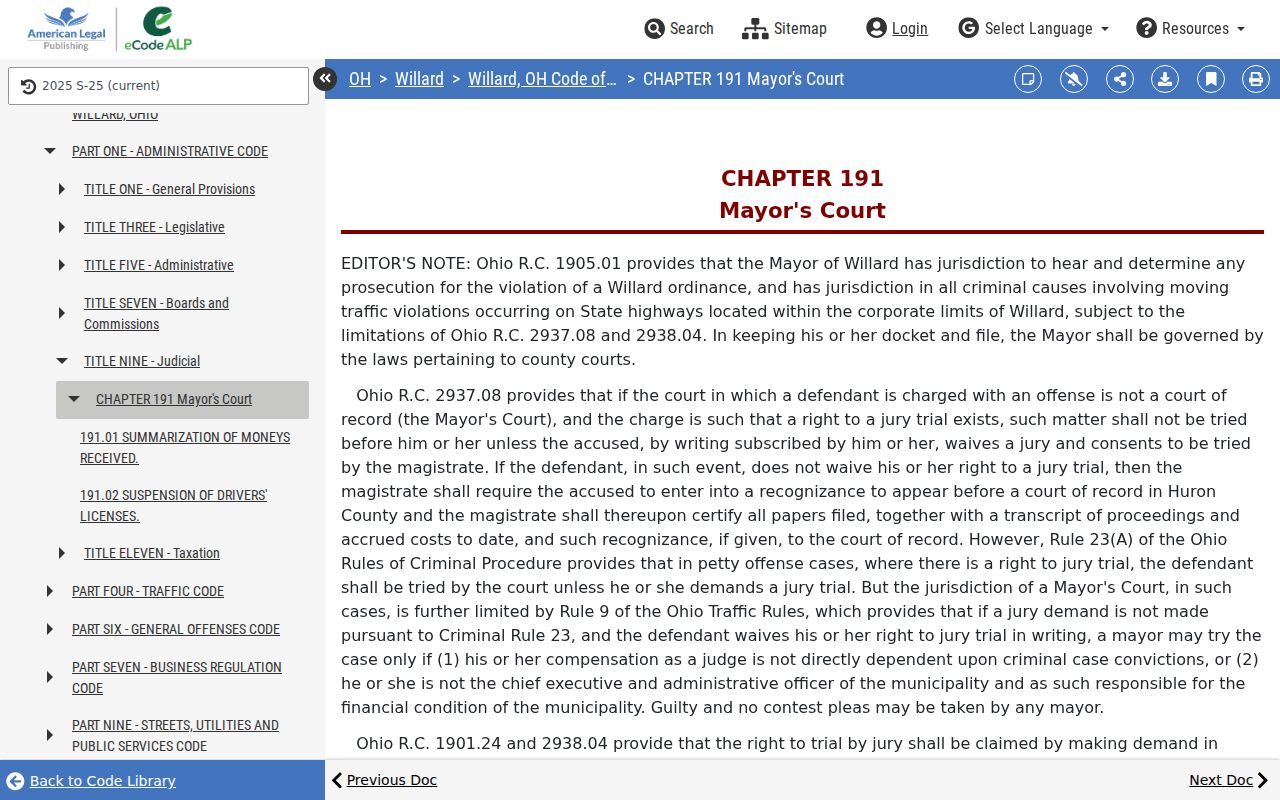
The Willard code helps explain what the mayor's court can handle and when a case moves out. Confirm any current Willard court date with City Hall or the court named on the case notice.
Willard Court Dates and Settings
For a Willard Mayor's Court matter, the citation is the first local date source. No public docket interface exists. Keep it. Keep any mailed or issued notice too. Then ask City Hall to confirm the Willard court date, docket availability, and venue. If the matter was certified to a court of record, the receiving court notice becomes the controlling lead for the next setting.
| Date | The Willard date printed on the citation or notice, confirmed with the Mayor's Court or receiving court. |
|---|---|
| Time | The time stated by the citation, court notice, or clerk after an inquiry about a Willard matter. |
| Courtroom | The Willard City Hall or court-of-record location identified on the current notice; the local research does not publish a standalone Mayor's Court docket screen. |
| Judge | The Mayor's Court official or receiving court officer shown by the relevant notice, if identified. |
| Setting Type | A Mayor's Court proceeding, plea-related event, or later court-of-record setting after certification. |
Willard City Hall sits at 631 S. Myrtle Ave., reachable at 419-933-2581. The city publishes no daily Willard calendar and no public-terminal location. Ask specifically about the record you need.
Willard Court Docket City Hall Route
For any Willard case question, City Hall is the place to start. Have the citation number handy, or pull out the paperwork itself. Tell the clerk or Mayor's Court contact what you have, then ask three things. Is the case still held locally? Can you request a docket or a copy? Did a court of record receive a certified transfer? Those questions keep a local municipal contact separate from a county court record keeper. That distinction matters when you chase a docket.
Do not count on a same-day answer, a set copy fee, a public screen, or online document images for a Willard case. Nothing published promises any of that. Ask the local record keeper directly instead of guessing with a nearby court's procedures.
Willard Traffic Tickets
Willard Mayor's Court can hear criminal moving traffic violations on state highways inside the city limits. Ohio law and local code set the bounds. The citation itself tells you the date and the venue. Read it first. A Willard ticket should not go to the city utility-payment page, the Common Pleas misdemeanor-payment channel, or a municipal CaseLook system. Wait until you know which court actually accepted it. Confirming that one fact saves a wasted docket search.
Call City Hall before the date printed on the paperwork. Ask whether an appearance is required, how to check the local record, and whether the matter moved on to a court of record. Willard offers no local deferred-disposition or driving-safety course program, so do not assume that option exists for a Willard traffic case.
Willard Traffic and Ordinance Docket Jurisdiction
Jurisdiction decides every Willard docket search. The Willard Mayor's Court reach is narrow, and Chapter 191 draws the line. It covers City ordinance violations. It also handles the specified criminal moving traffic matters. Those sit on state highways inside Willard. A general Huron County traffic matter does not land there. Nor does a juvenile traffic case or a felony. The court level and venue printed on the citation control where the record lives.
For most Huron County territory, Norwalk Municipal Court handles adult traffic cases. Bellevue covers Bellevue, Lyme, and Sherman Township matters. Willard's Mayor's Court is its own separate local path. Read the citation before picking a portal, or you may search the wrong court and come back with nothing.
Where Willard Cases End Up
Willard cases do not routinely roll up to Common Pleas. A Mayor's Court matter can simply stay local, inside the jurisdiction Chapter 191 gives it. The escalation rule is more specific than that. The jury right applies and is not waived. The Mayor's Court official then certifies the filed papers, the transcript of proceedings, accrued costs, and the recognizance to a court of record in Huron County.
Docket flow: Willard Mayor's Court › Huron County court of record › Huron County Court of Common Pleas when the receiving court has jurisdiction
The code names no web page for every transferred Willard record. So ask the local record keeper. Ask which court received the papers. Then take your docket search to that court's own clerk and record channel. A transfer is a confirmed routing event, nothing more. It is not a reason to assume every Willard case turns up in the Common Pleas search.
Willard Jury-Right Court Docket Transfer
The transfer rule works like this. When the jury-right condition in the Willard code applies and the right is not waived, the Mayor's Court certifies the papers, transcript, costs, and recognizance to a Huron County court of record. The receiving court then builds its own record. It carries different docket details and a new setting. So the Willard record and the receiving record often show distinct stages of the case rather than matching web results.
Track that path with a little care. Keep the citation and the notice. Contact City Hall first. Confirm the certification went through, then call the court the transfer named. If the receiving court is Huron County Common Pleas, the Clerk of Courts Legal Division keeps the General and Domestic Relations records. If a different court is named, that court's clerk is your source.
Public Access to Willard Court Records
Willard Mayor's Court records follow Ohio's access rules. But public access has limits. Not everything is searchable from home. Restricted material will not be released through a general request. Start with the citation and the City Hall route. Then ask the keeper identified for the Willard matter. If a court of record received the file, request the current record from that court instead.
Key Rules:
Ohio Sup.R. 44-47 presumes court-record access while separating remote access, direct access, and restricted categories.
Ohio Revised Code 149.43 supports public-office inspection and copying subject to stated exceptions.
Ohio Revised Code 2151.356 establishes a distinct juvenile sealing process, so juvenile matters should not be assumed to appear in an ordinary public search.
Willard Court Docket and Older Records
Ohio's municipal records manual treats a Mayor's Court docket, index, and journal as permanent records. Ordinary criminal and traffic case files follow shorter retention schedules instead. That gap explains a lot. An old Willard docket entry may survive. The full case file may have been cleared out under a retention rule. The manual says nothing about online access, either. It does not promise that City Hall still holds every original sheet of paper.
For an older Willard matter, the smart move is simple. Call the Mayor's Court record keeper directly. Ask three things. Does the docket entry still exist? Is the full case file available, or is there a certified transfer record? And does another court now hold the active file? The answer depends on the matter's jurisdiction. It also depends on how the case moved between courts and what type of record you request. Willard publishes no public portal. So this call is the city-specific fallback when a docket search online turns up empty.
Say the record keeper names a receiving court. Keep your Willard paperwork. Then take the next docket search or records request straight to the court named in the transfer notice. That handoff matters more than it sounds. After a lawful certification, the records can split. The permanent Willard docket reference and the active case file can sit in two different offices.