
How to Search the Bellevue Court Docket
Start your Bellevue court docket search at Bellevue CaseLook. Accept the disclosure first. Then search using details from your citation or case papers. This tool is the court's own public case-information entry, not a statewide Ohio database. According to the court, its data-retrieval system limits what gets posted, and new entries may lag behind a filing or court action by 24 hours or longer.
- Match the location and case type to Bellevue Municipal Court before entering a name or citation.
- Open Bellevue CaseLook, read the notice, and continue to the court's current public-search form.
- Use the available case information and treat the displayed date or entry as a public lookup lead.
- Compare a traffic date with the citation or a civil setting with the court's notice, because a posting can be delayed.
- Request or visit Bellevue Municipal Court at 165 Bellevue Way, or call 419-483-5880, for verified information or copies.
Not every case belongs in Bellevue. Felonies, Common Pleas general or domestic matters, probate cases, and juvenile cases each follow a separate court path. The clerk's General and Domestic Relations records live elsewhere. Use the Huron County Common Pleas search instead. That site is its own channel, not a replacement for Bellevue CaseLook.
Bellevue Court Docket Across Three Counties
Geography, not the city name, decides what lands on the Bellevue Municipal Court docket. The court's territory is wide. It covers Bellevue City, Lyme and Sherman Townships in Huron County, York Township in Sandusky County, and part of Groton Township in Erie County. That three-county reach matters. A Bellevue docket search may be the right municipal search even when you connect the matter with Huron County. One Huron rule stands out. Lyme and Sherman Township matters belong in Bellevue Municipal Court, not Norwalk Municipal Court. Bellevue is not a backup option for a Norwalk case. It is the proper court when the geographic rule puts the matter there, and its clerk and CaseLook are the tools to use. A Bellevue search can also surface a court record tied to Sandusky or Erie County land. That result is still a Bellevue Municipal Court record under its own territorial assignment, not a Huron County Common Pleas record. Before asking another clerk to locate a Bellevue docket, check two things. Where did the event happen, and which township appears on the ticket, complaint, or court notice? The local boundary often matters more than the county name when choosing a search channel. Keep the original court paperwork whenever you need a copy or a date. A Bellevue clerk can work from the case number and the court's local file. Another county clerk may not hold a municipal record just because a party lives there. Knowing this city-specific rule saves a needless loop between Bellevue, Norwalk, and county offices. The real question is simply which municipal docket applies.
The Bellevue Municipal Court
Bellevue Municipal Court was established in 1952 and sits at 165 Bellevue Way, Bellevue, Ohio. Judge David J. Claus and Clerk Katja Soper are listed with the court. It is open Monday through Friday from 8:30 a.m. to 4:30 p.m. Its municipal docket covers traffic, criminal, civil, and small-claims matters within the defined territory. This is not just a narrow city-ordinance function. That mix of case types is why a case title alone may not reveal the full record path. A traffic or misdemeanor entry sits on the Bellevue municipal docket. A civil file is also a Bellevue court record while it stays within the court's jurisdiction. But a felony or Common Pleas domestic matter follows a different search channel entirely. When the paperwork does not make the court level clear, use the sound fallback. Call the Bellevue clerk with the case number or citation. The Bellevue Municipal Court home page gathers the local court's access points in one place, from records to payment instructions.
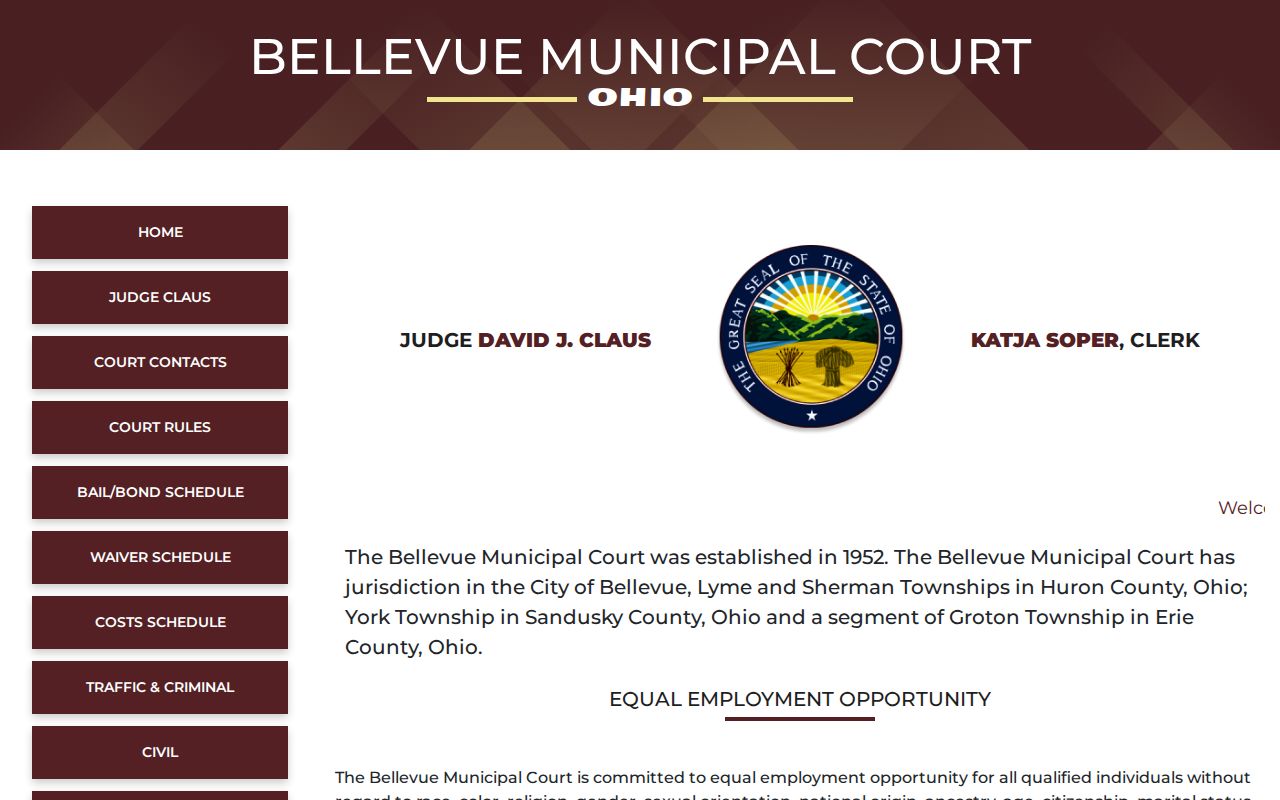
The court's own site shows why identity matters before any search. Records, schedule information, forms, and payment instructions all live with the local court itself.
Bellevue CaseLook Court Docket Notice
Bellevue CaseLook opens with a disclosure and a Continue step. The court explains that its data-retrieval system constrains the posted information, which can run more than a day behind what happened in the courtroom. If a Bellevue record shows no recent entry, call the clerk to confirm rather than running repeated searches hoping the next one forces an update. For verified data, the court directs people to request or visit Bellevue Municipal Court. The official Bellevue CaseLook notice states these limits directly on the page.
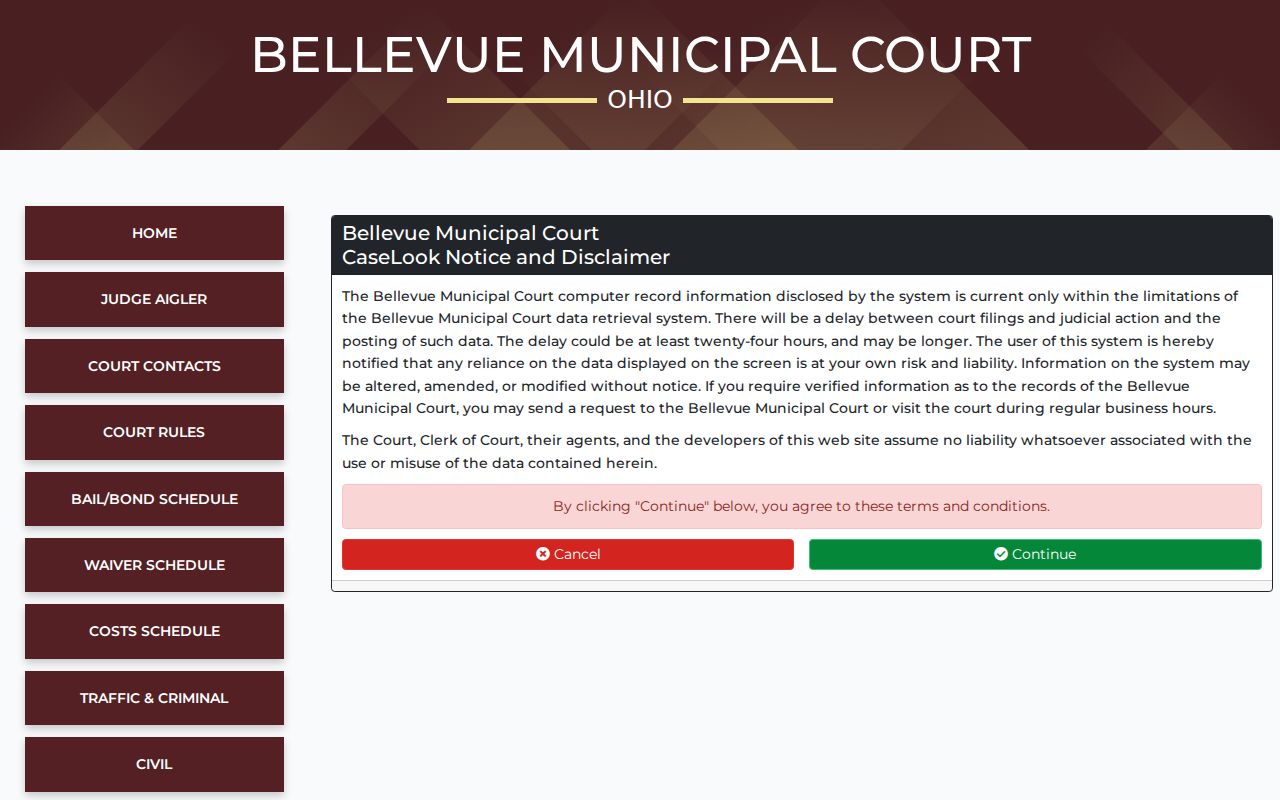
The notice frames the online record as one access channel with real limits. The clerk's counter remains the local route for verification and copies.
Bellevue Court Dates and Settings
A Bellevue setting can come from several places. CaseLook, the court's published hearing pattern, or the notice issued in the case. Parties must appear when scheduled. The online record can lag. So call Bellevue Municipal Court whenever a CaseLook setting conflicts with a recent notice or a deadline is close. Missing a court date can lead to a warrant. That applies in matters where the court's rules allow it.
| Date | The Bellevue scheduled date on the case record, notice, or citation. |
|---|---|
| Time | The assigned Bellevue hearing time, confirmed with the clerk if the public entry is delayed. |
| Courtroom | The Bellevue Municipal Court location at 165 Bellevue Way unless the court directs a different local appearance arrangement. |
| Judge | The Bellevue judicial officer stated by the court or a particular record when identified. |
| Setting Type | A local event such as arraignment, preliminary hearing, pretrial, bench trial, suppression hearing, or civil/small-claims setting. |
A hearing label on a Bellevue docket marks a stage, not an outcome. Arraignment, pre-trial, bench trial, and suppression settings each describe a stage of the case. Each shows where a case stands on that day. Later docket entries can reset or move any future appearance. So when a date truly matters, trust the court's own notice. Confirm it with the Bellevue clerk. The weekly pattern is context only. It never stands in for the notice in the individual court record.
Bellevue Court Docket Monday and Tuesday Pattern
Bellevue's weekly rhythm offers helpful context. It never replaces the notice for a specific case. Mondays lean toward traffic plus criminal matters: incarceration, preliminary, pre-trial, and final pre-trial hearings. Tuesdays carry traffic and criminal arraignments. They also hold preliminary hearings, bench trials, suppression hearings, and miscellaneous hearings. Civil and small-claims matters appear too. A label read against that pattern has meaning. It cannot tell you whether a particular case was reset. For that, check the case itself. The Bellevue schedule and payment information publishes the court's own weekly pattern.
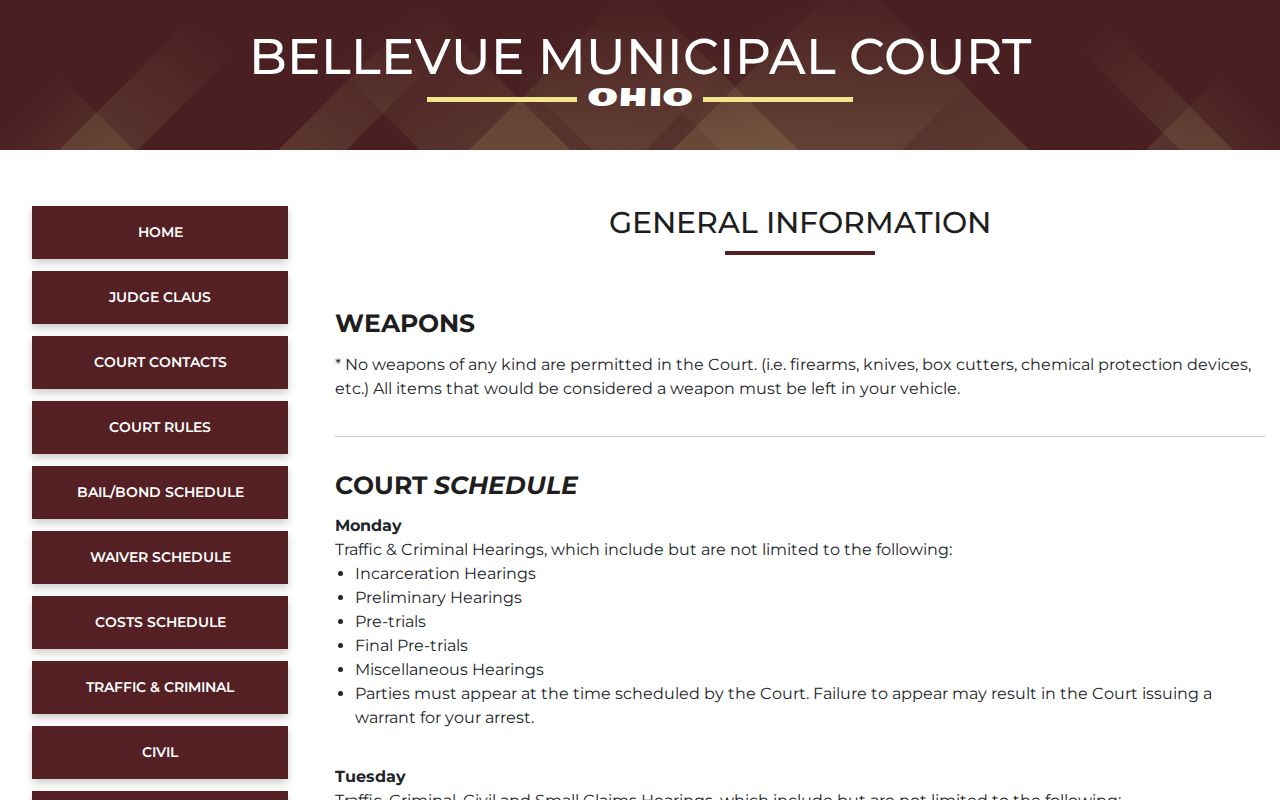
The schedule sketches the local calendar. The current event in any Bellevue docket comes from the individual court record, the notice, and the clerk.
Bellevue Traffic Tickets
For a Bellevue traffic or criminal case, pair CaseLook with the citation to find the court date. Then follow the court's payment or appearance instructions. Bellevue traffic and criminal matters fit the Monday and Tuesday pattern, but a citation can still demand a specific hearing. Miss a mandatory appearance, or plan to contest one? The court's record and the clerk set the correct case path. Bellevue takes cash, money order, or certified check at the court or by mail. Do not mail cash. Cards run through the court's online route or call center, using court code 13815 plus a processing fee. The counter itself accepts no credit or debit cards.
Bellevue Card Payment Court Docket Route
The card option does not live at the clerk counter. That one distinction saves trips. Bellevue treats card payment as an online or call-center route under court code 13815. The counter and mail rely on the other accepted methods. A processing fee rides along with every card transaction. The court posts no fine schedule, so treat any general total with care. For questions that turn on hours or staffing, the Bellevue court staff, hours, and phone page lists what the court itself provides. The general information page states the payment-channel split.
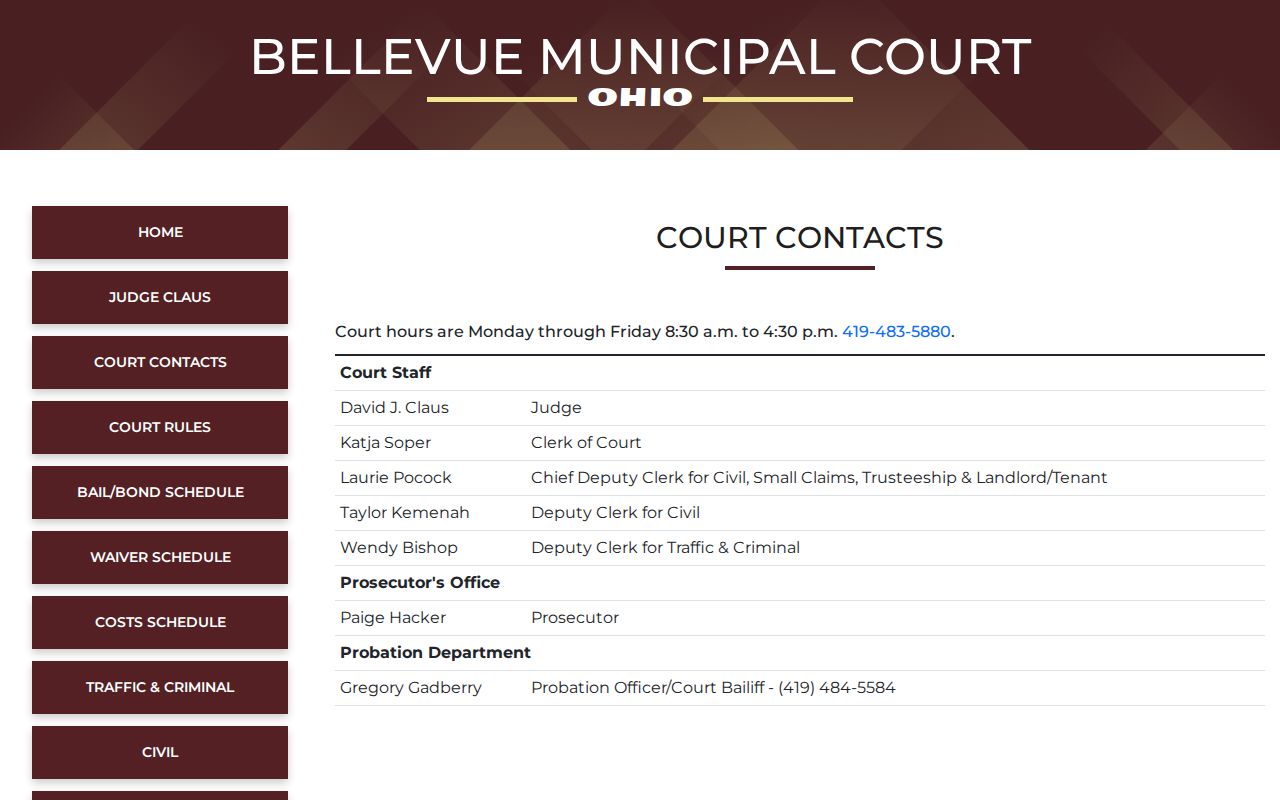
Staff and phone contact helps most when a payment question is really a court-date question. A Bellevue card transaction settles money, not the docket. It says nothing about whether a case is payable, still set for hearing, or routed through the court's local record path. Those answers come from the clerk.
Where Bellevue Cases End Up
Bellevue Municipal Court keeps its own municipal docket. A Bellevue civil, traffic, criminal-misdemeanor, or small-claims case does not land in the Huron County Common Pleas system by default. Felonies travel a separate county-court path, as do Common Pleas General and Domestic Relations cases. Which court receives a matter depends on case type. Jurisdiction plays its part too. There is no blanket city-to-county transfer rule.
Docket flow: Bellevue Municipal Court › Huron County Courts › Huron County Court of Common Pleas
When a Bellevue matter becomes a Huron County Common Pleas case, the Huron County Clerk of Courts Legal Division holds the General and Domestic Relations records. The Common Pleas portal serves as that county channel. Bellevue CaseLook stays the municipal source for a Bellevue docket.
Bellevue Civil Court Docket Boundary
Bellevue's civil division caps its jurisdiction at $15,000, excluding interest and costs. Local tests also apply. The court looks to Bellevue, Lyme, and Sherman geography. Residency, business, events, and property all count there. That makes the Bellevue civil docket its own municipal record channel. It is not a first screen for filings that may later reach Common Pleas. The Bellevue civil page states the court's civil jurisdiction and filing rules.
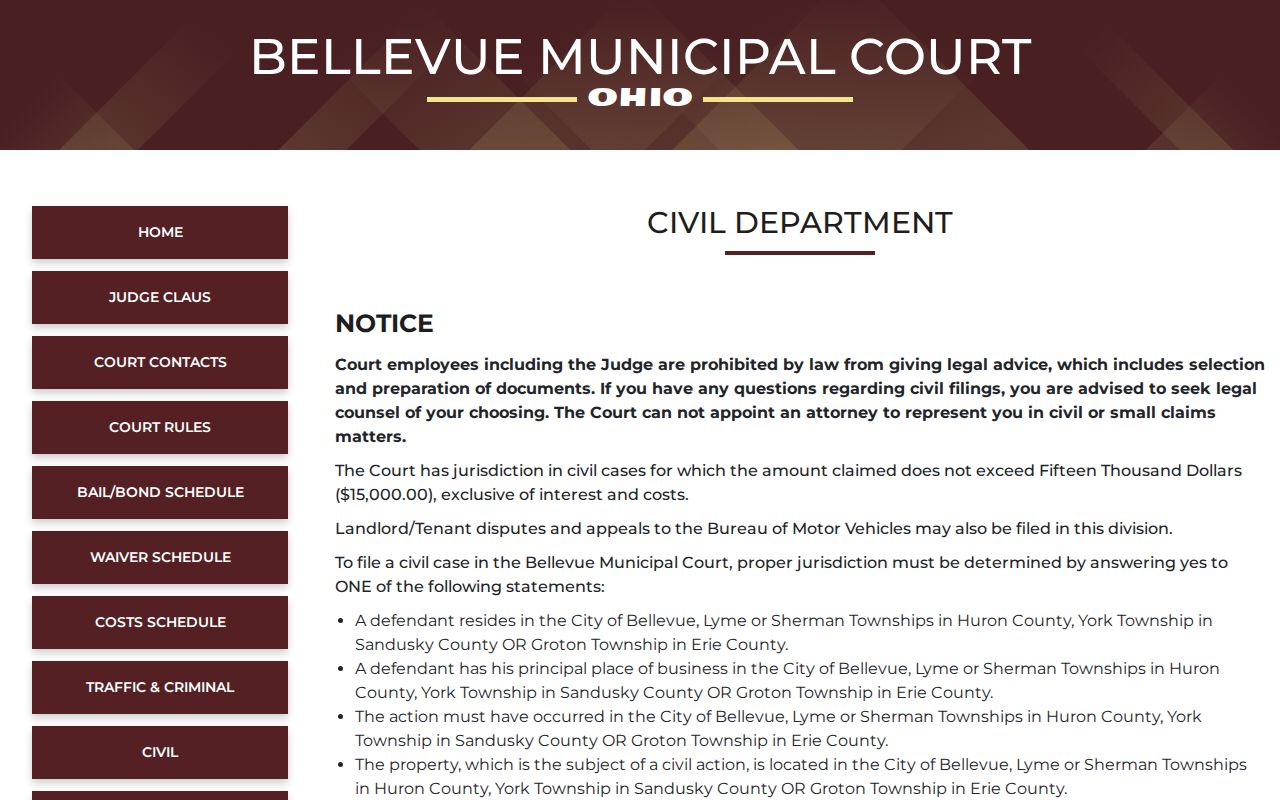
The civil material ties the city court's territory and dollar limit to the docket worth searching. When in doubt, ask the clerk to locate the case.
Public Access to Bellevue Court Records
Bellevue court records follow Ohio court-record access rules. Public access bends to limits on protected information and sealed matters. CaseLook offers a public route to case information. A full document, certified copy, or verified result may still require the Bellevue clerk. And a gap online never means a restricted record opens through some other search. There is a practical side too. A docket lists court activity in order. But a filed document, signed order, transcript, or certified copy follows its own availability and request process. Ask for the exact Bellevue record you need. Give the case number and date range when you have them. The clerk can say whether an item is public or restricted. The clerk can also say if it sits in the court file or is held elsewhere.
Key Rules:
Ohio Sup.R. 44-47 presumes court-record access while addressing remote access, courthouse access, and restricted categories.
Ohio Revised Code 149.43 supports public-record inspection and copying by a public office, subject to exceptions.
Ohio Revised Code 2151.356 provides a separate juvenile sealing process, so juvenile material should not be expected in an ordinary public lookup.
Bellevue Court Docket Records Request
Bellevue uses its own Public Records Request form. The form wants a date, your name, a phone number, the case number or numbers, and a clear description of what you need copied. Prices are set on the form itself. Regular copies run $0.05 per page. Certified ones run $1 per page, due when you pick them up. Those rates belong to Bellevue court alone. So do not treat them as Huron County prices.
Fill out the request the smart way. Give the case number when you have it. Describe the record well enough that the clerk cannot miss it, and state whether you need certification. If a case was transferred, or access rules seem murky, call 419-483-5880 and ask. The clerk can also explain how a CaseLook screen differs from the official Bellevue court record.